Stop Writing Long Prompts: Build Reusable AI Skills
The best AI users we know are not prompt poets. They package what works and reuse it.
BOTNOi Engineering
4 min read · Sep 5, 2026
The best AI users we know are not prompt poets. They package what works and reuse it.

Reusable AI skills are modular, task-specific instruction files that replace monolithic prompt engineering. Instead of pasting long walls of text into your models, teams package targeted rules—such as reviewing code or drafting release notes—into distinct components that AI agents load on demand, dramatically improving maintainability and team productivity.
There is a stage everyone goes through with AI tools. You discover that a detailed prompt produces better outputs, so you write longer prompts. Over time, those prompts balloon into multi-thousand-word master documents that team members paste before starting every task. Eventually, people become afraid to modify a single line because nobody knows which instruction controls which behavior.
A monolithic wall-of-text prompt mixes too many distinct concerns:
When an output goes wrong, debugging becomes nearly impossible. You cannot easily isolate whether the failure stems from conflicting tone rules, ambiguous format constraints, or context overflow.
To understand why switching to modular components works, consider how monolithic prompts compare to reusable AI skills:
| Feature | Wall-of-Text Prompts | Modular AI Skills |
|---|---|---|
| Maintainability | Low; changing one rule can unintentionally break other behaviors. | High; each skill is isolated in a separate, focused file. |
| Team Sharing | Copy-pasting long text snippets leads to version drift across teams. | Version-controlled in a repository and shared centrally. |
| Failure Debugging | Difficult to isolate which part of the prompt caused a failure. | Straightforward to pinpoint and adjust specific task instructions. |
| Context Efficiency | Consumes context window with irrelevant rules for simple tasks. | Loads only the specific instructions needed for the active task. |
| Agent Integration | Requires manual insertion or fragile multi-task master prompts. | Seamlessly callable by agent frameworks like the AI Agent Platform. |
A reusable AI skill is a short, focused set of instructions designed for one specific task. Each skill has a clear identifier, trigger conditions, and concrete execution constraints. Instead of forcing an AI model to read your entire operational playbook for every query, modern agent architectures inspect incoming user requests and dynamically load only the relevant skill.
For example, building effective autonomous workflows—as discussed in our guide on how AI agents are not chatbots with a new name—requires clear separation between execution logic and specialized skills.
Here is an example structure of a modular skill definition:
skill: release-note-generator
when: summarizing merged pull requests for external deployment
rules:
  - lead with user-visible functionality changes
  - exclude internal issue tracking ticket numbers
  - keep formatting concise with bullet points
  - maximum length of 120 words
By defining instructions cleanly, you can update execution rules across your entire workforce by editing a single configuration file.
To build robust skills, structure your skill definitions cleanly with standardized sections:
code-review-sql) so your system or orchestration layer can route to it deterministically.when): Define exactly when the agent should select this skill, preventing unnecessary context loading.rules): Write strict, testable guidelines. State what the AI must do and what it must avoid doing.When teams establish a standardized pattern for skills, overcoming workflow bottlenecks becomes significantly simpler—much like how structured prompts help teams solve the blank page problem.
Package what works. Reuse it. Improve it in one central location.
Switching from monolithic prompt engineering to modular AI skills delivers several key operational advantages:
For teams building production systems, referring to official platform capabilities and Docs & API guides helps align skill design with multi-agent orchestration frameworks.
Implementing modular AI skills within your existing workflow involves three practical steps:
The future of working with AI looks less like writing magic spells and more like building a reliable, maintainable software toolbox.
Prompt engineering often relies on writing long, single-use text prompts containing all rules and context. Reusable AI skills package specific task instructions into small, modular, version-controlled files that agents load dynamically on demand.
Modular skills can be stored in code repositories, allowing teams to review, version, and share standardized instructions. This ensures consistent AI behavior across the organization without copy-pasting massive prompts.
Yes. By loading only the relevant skill required for a specific sub-task instead of passing massive master prompts on every request, you significantly lower prompt token counts and reduce API expenditures.

Discover why low-latency speech synthesis and real-time multimodal models are making voice the primary interface for AI applications.
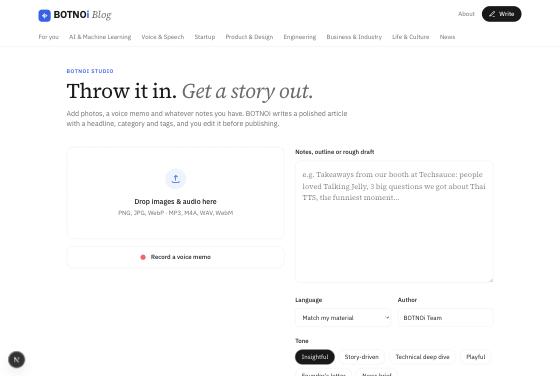
Behind the scenes at BOTNOI Blog: How we use AI to transform voice memos and photos into polished article drafts, curing blank page syndrome in minutes.

BOTNOI Blog is BOTNOI Group's hub for AI insights, tech updates, and practical lessons—designed to help you stay ahead of trends and power modern business.