AI agents are not chatbots with a new name
The difference is not intelligence. It is whether the software can actually finish the job.
BOTNOi Team
2 min read · Oct 21, 2026
The difference is not intelligence. It is whether the software can actually finish the job.

Every few years the industry renames the same idea and sells it again. It is fair to be skeptical when "AI agent" shows up on every slide deck. But this time there is a real difference underneath the label, and it is worth understanding.
A chatbot's job ends when it gives you an answer. Ask about a refund policy and it tells you the policy. You still have to go and request the refund yourself.
An agent's job ends when the task is done. Ask for the refund and it checks your order, confirms you are eligible, files the request in the back-office system and tells you when the money will arrive.
The language model inside both can be identical. What changes is that the agent is connected to tools, it can plan several steps, and it is allowed to act.
An agent needs real access: an API to look up a customer, a function to book an appointment, a way to search internal documents. Without tools it is just a conversation.
It needs to know who it is talking to and what has already happened, both within a conversation and across them.
Most importantly, it needs limits. Which actions it can take on its own, which ones need a human to approve, and what it should never do. Guardrails are what make agents safe to deploy in a bank or a hospital.
The language model can be identical. What changes is that the agent is allowed to act.
If you are deciding what to build, write down the ten most common requests your team gets. For each one, ask: does the customer need information, or do they need something done?
If most are information, a well-built chatbot connected to your documents will serve you well. If most are actions, that is where agents earn their keep.
The most useful way we have found to think about agents is as a digital workforce: software colleagues that handle repetitive, well-defined work so people can focus on the cases that need judgment and empathy.
They will not replace teams. But the teams that learn to work with them will move a lot faster than the ones that do not.

โมเดล AI ขนาดเล็กที่รันได้บนอุปกรณ์ทั่วไป อาจทำให้โรงเรียนทั่วประเทศเข้าถึง AI ได้ง่ายกว่าที่เคย
Voice AI is rapidly shifting from robotic text-to-speech engines into fluid, real-time conversational systems. Here is why speech is emerging as the primary interface for the next generation of AI.
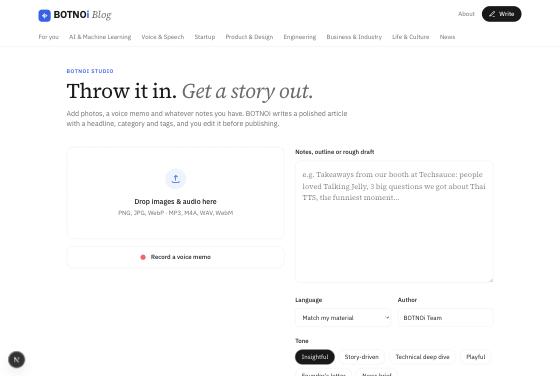
BOTNOI Blog เปิดตัวพร้อมเครื่องมือเขียนบทความที่ช่วยเปลี่ยน Voice Memo และรูปถ่ายดิบๆ ให้กลายเป็นเรื่องเล่าคุณภาพ เพราะหน้าที่ของ AI คือการทลายหน้ากระดาษว่างเปล่า ไม่ใช่การแทนที่เสียงของมนุษย์