Small AI in Education: A Cost-Effective and Secure Alternative
Not every classroom needs the largest model. Sometimes a small, performant, fast, and affordable model is the right answer.
BOTNOi Academy
4 min read · Sep 18, 2026
Not every classroom needs the largest model. Sometimes a small, performant, fast, and affordable model is the right answer.
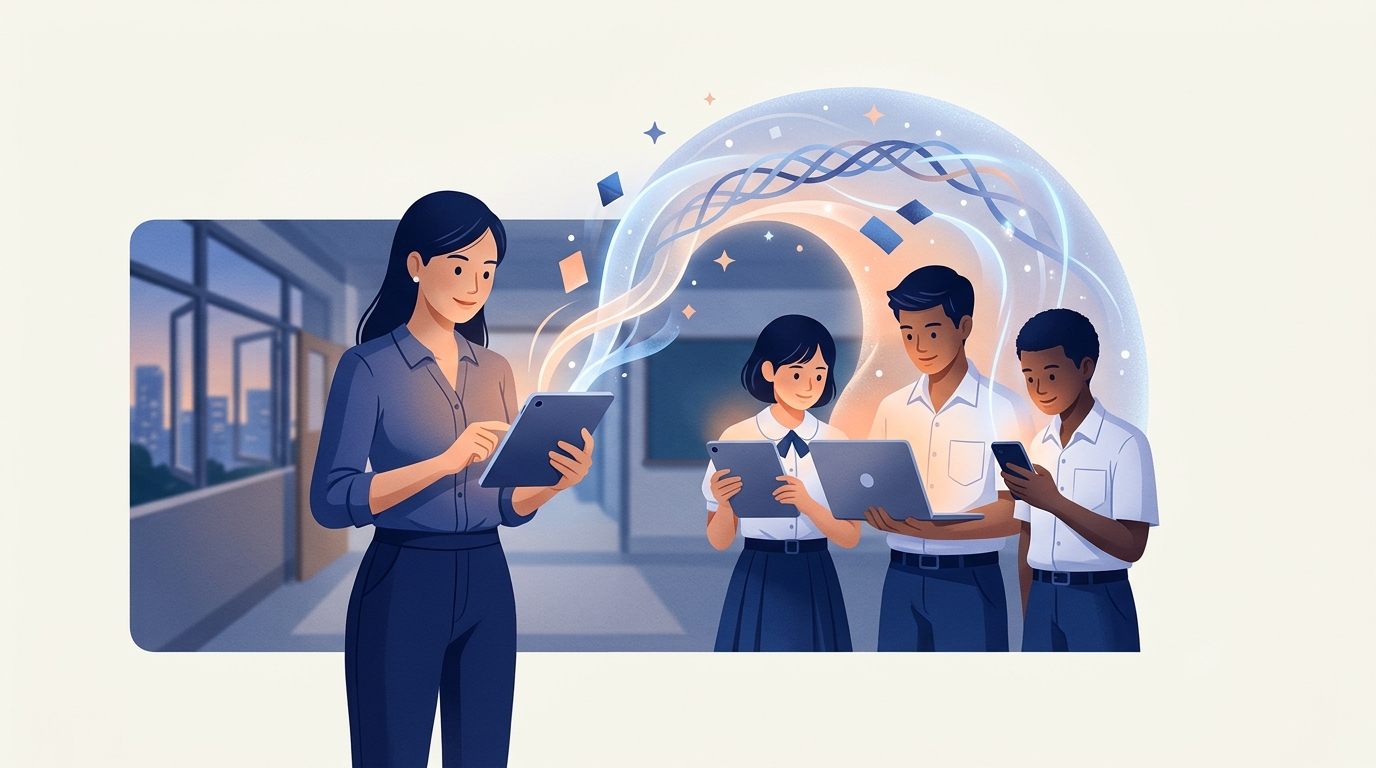
Small AI in education refers to compact artificial intelligence models with low parameter counts that can run directly on consumer laptops, desktop computers, or tablets without relying on cloud infrastructure. This approach enables educational institutions to deploy AI teaching assistants, customize models for specific curricula, cut budget overhead, and effectively safeguard student data.
Imagine a teacher at a rural school who wants students to practice English Q&A or review lessons with an AI every day. However, the classroom faces unreliable internet connectivity and has a tight budget for expensive, large-model API fees. This real-world constraint is shared by countless schools—and it is precisely why Small AI technology has emerged as such a compelling option for modern education.
Small AI refers to Small Language Models (SLMs) that have been intentionally engineered and compressed to feature far fewer parameters than their massive counterparts. This allows them to be installed and run locally on standard hardware—such as standard laptops, tablets, or budget-friendly local servers right inside the school.
At its core, Small AI operates on local processing. Learning data and student interactions are computed entirely on-device, offering near-instant response times without broadcasting data outside the school network. This directly addresses network bandwidth limitations and budget constraints.
Because Small AI models can run on existing hardware, the per-inference cost drops to virtually zero. Schools are relieved of monthly subscription fees or pay-per-token API charges, empowering teachers to offer unlimited practice and interaction for every student.
Data privacy and child safety are paramount in any educational system. Deploying Small AI keeps learning logs, prompts, and student histories strictly on local school hardware instead of routing them to public cloud servers—effectively eliminating data leak risks and aligning with digital safety best practices.
Despite their compact scale, Small AI models can be fine-tuned to excel in specific domains, such as science, history, or the Thai language (Pha-sa Thai). Assigning specialized roles and skills aligns with the philosophy outlined in Stop Writing Long Prompts: Build Reusable Skills Instead, enabling the AI to deliver accurate answers aligned with national curriculum standards better than off-the-shelf generalist models.
Not every classroom needs the largest model, but every classroom deserves access to safe, functional AI.
| Evaluation Criteria | On-Premise Small AI | Cloud-Based Large AI |
|---|---|---|
| Operating Cost | Cost-effective; runs on local hardware | API usage fees or recurring monthly subscriptions |
| Speed & Stability | Fast local processing; unaffected by concurrent internet usage | Dependent on internet bandwidth and connection stability |
| Data Security | High; student data stays strictly on school devices | Inherent risks associated with sending student data to external clouds |
| Customizability | Easily fine-tuned for subject-specific curricula | Broad general knowledge, but may lack alignment with local curricula |
While Small AI offers distinct advantages, educators must recognize its limitations for effective deployment. Smaller models are not designed to resolve complex, multi-layered queries or provide deep reasoning on par with massive models. They may occasionally return incomplete information when asked questions outside their trained context.
Consequently, the teacher's role remains crucial in structuring learning activities, verifying content accuracy, and guiding students. Educators can use Small AI as an efficiency tool—for example, generating quizzes or facilitating interactive language drills—much like using AI to spark initial ideas as described in Behind BOTNOI Blog: How AI Cures 'Blank Page Syndrome' for Creators.
Educators and instructional designers can deploy Small AI in various practical classroom scenarios, including:
Transformative shifts in education do not require the largest or most expensive technology. They begin with small, reliable, accessible tools that solve real-world problems for teachers and students every day.
Small AI consists of lightweight models that run locally on standard classroom computers without requiring a cloud connection, making it far more cost-effective and secure. Large AI offers broader general knowledge but requires high-speed internet connectivity and incurs API costs.
Yes. Because Small AI models are installed and processed directly on local PCs or tablets, learning activities continue seamlessly even when internet connections are unstable or unavailable.
No. Modern user interfaces and applications allow educators to deploy Small AI, customize teaching materials, and define subject-specific roles without writing a single line of code.
Small AI can act as a conversational tutor for text-based Q&A practice or integrate with voice technologies to help students practice listening and speaking foreign languages directly in the classroom.

Discover the key differences in AI agent vs chatbot performance, tools, and workflows. Learn when to implement agents that execute tasks versus simple chatbots.

Discover why low-latency speech synthesis and real-time multimodal models are making voice the primary interface for AI applications.
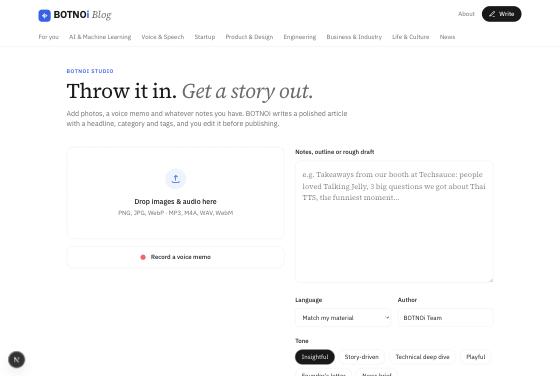
Behind the scenes at BOTNOI Blog: How we use AI to transform voice memos and photos into polished article drafts, curing blank page syndrome in minutes.