Voicebot in Hospital: Key Use Cases & Smart Escalation
Appointment reminders at scale, without losing the human touch where it counts.
BOTNOi Solutions Team
4 min read · Sep 30, 2026
Appointment reminders at scale, without losing the human touch where it counts.

A voicebot in hospital workflows is an automated voice AI system designed to handle high-volume routine administrative phone calls, such as confirming appointments, delivering pre-visit instructions, and conducting basic post-discharge check-ins. By automating repetitive outgoing and incoming calls, voicebots reduce staff workload while transferring urgent or complex clinical queries immediately to medical professionals.
Picture the phone desk at a busy hospital on a Monday morning. Call center agents and nurses handle dozens of repetitive calls to confirm upcoming procedures, remind patients to fast before blood tests, or verify post-discharge recovery steps. Each call is short, important, and repetitive. When administrative staff are buried under thousands of routine calls every week, patient wait times rise and burnout increases.
Deploying specialized voice AI tools, such as BOTNOI Voice technology integrated into hospital systems, helps healthcare facilities streamline outreach without sacrificing quality. As discussed in our article on Why Voice AI Is Becoming the Primary Interface for AI, voice interaction provides a natural, accessible touchpoint for patients of all technical backgrounds.
Voice AI systems excel at structured tasks that follow predictable paths. When implemented thoughtfully, a voicebot handles routine administrative communication at scale while feeding updated information directly into the hospital's Electronic Health Record (EHR) system.
Key operational use cases include:
By handling these high-volume inquiries, hospitals recover hundreds of staff hours every month while keeping patient schedules running smoothly.
While voice AI brings tremendous efficiency, a voicebot should never serve as the final line for clinical judgment or emotional support. Healthcare workflows differ fundamentally from typical commercial support systems; as explored in our piece on how AI agents are not chatbots with a new name, specialized AI workflows must operate with strict boundaries and escalation pathways.
Human escalation must occur immediately under the following conditions:
When escalating, advanced AI Chatbot & Voicebot architectures perform a "warm handoff." The bot transfers the caller alongside a real-time summary of the conversation to the nurse's desktop, ensuring the patient does not have to repeat their information.
Design for the patient first. The efficiency follows.
Building trust with patients requires complete transparency and strict compliance with health data privacy regulations. Patients should always know from the outset that they are speaking with an automated assistant.
To preserve patient confidence:
When designed around patient safety, a voicebot does not make hospital care feel cold or mechanical. Instead, it ensures administrative tasks run reliably in the background so healthcare professionals can devote their full time and empathy to patients who need critical attention.
A hospital voicebot primarily handles structured, high-volume communications such as confirming appointments, sending pre-visit fasting or preparation instructions, conducting routine post-discharge check-ins, and gathering initial information for call routing.
If a patient reports pain, unexpected symptoms, or distress, the voicebot immediately triggers an emergency protocol or hands off the call to a nurse along with the patient's conversation history.
Healthcare interactions involve unpredictable clinical nuances and emotional needs that AI cannot evaluate. Immediate human escalation ensures patient safety, accurate clinical triage, and compliance with healthcare standards.
No. Voicebots automate repetitive administrative tasks to reduce call backlogs and phone queues. This frees administrative and clinical staff to focus on complex patient care and urgent operational tasks.

Discover why low-latency speech synthesis and real-time multimodal models are making voice the primary interface for AI applications.
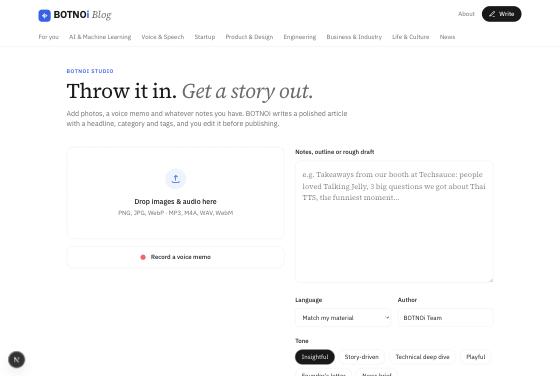
Behind the scenes at BOTNOI Blog: How we use AI to transform voice memos and photos into polished article drafts, curing blank page syndrome in minutes.

BOTNOI Blog is BOTNOI Group's hub for AI insights, tech updates, and practical lessons—designed to help you stay ahead of trends and power modern business.